


Why Tobacco Growing Regions Matter
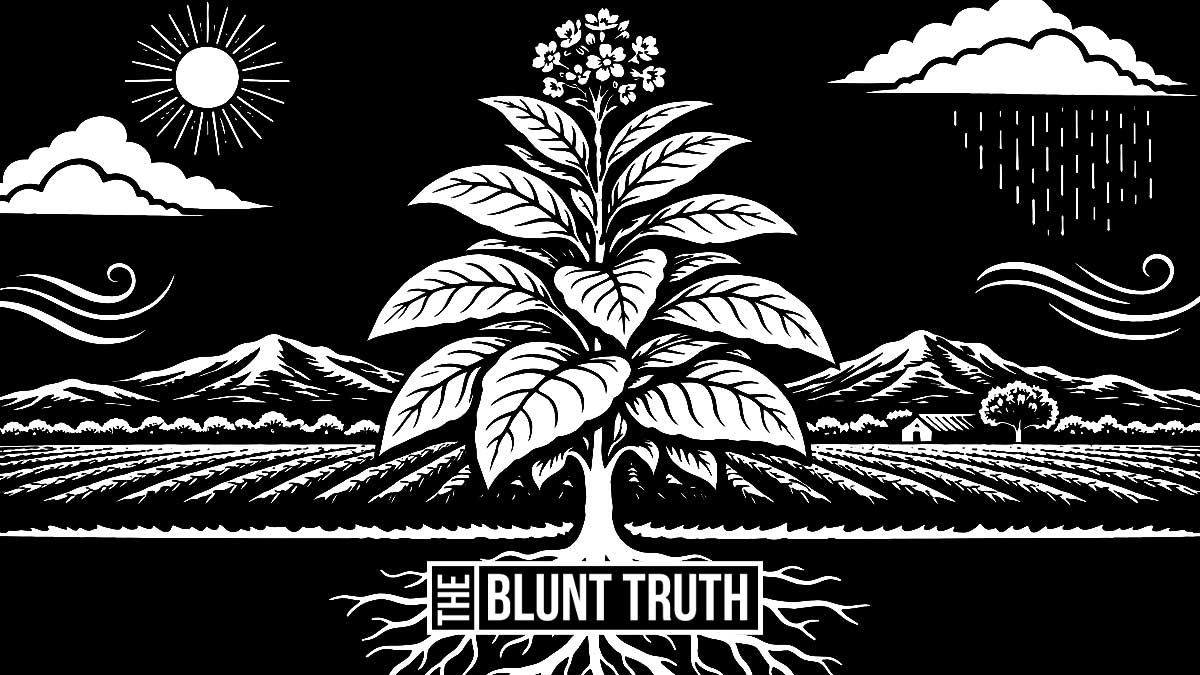
Tobacco leaf is shaped not only by seed type and cultivation methods, but also by the region where it is grown. Climate, soil composition, elevation, rainfall, and local agricultural knowledge all influence how tobacco develops in the field.
Quick Answer
Tobacco growing regions matter because differences in climate, soil, and farming practices influence how tobacco plants grow and how their leaves develop.
Climate Shapes Tobacco Plants
Temperature, humidity, rainfall, and sunlight all influence the growth of tobacco plants. Even when the same tobacco variety is planted, different climates can produce leaves with noticeably different physical characteristics.
These environmental factors affect how large leaves grow, how thick they become, and how much oil they develop during maturation.
Soil Influences Leaf Structure
Soil composition plays a major role in how tobacco plants develop. Factors such as drainage, mineral content, sand or clay levels, and organic matter all affect plant growth.
Tobacco often grows best in well-drained soils that are not overly rich in nutrients. In many cases, soils that are too fertile can produce thicker leaves that may not be ideal for certain tobacco uses.
Elevation and Geography
Elevation and surrounding geography can also influence tobacco crops. Higher elevations may bring cooler temperatures and different rainfall patterns, while lower elevations may produce warmer and more humid growing conditions.
These environmental differences can influence the way tobacco plants grow and how their leaves mature in the field.
Regional Agricultural Knowledge
Tobacco growing is not only shaped by the environment. It is also shaped by local farming knowledge. In established tobacco regions, growers often refine planting, spacing, harvesting, and curing practices over generations.
This accumulated experience helps farmers consistently produce tobacco suited to different uses such as wrapper, binder, or filler.
Tobacco “Terroir”
In discussions about agricultural crops, the combination of soil, climate, and local farming knowledge is sometimes referred to as terroir. The same concept applies to tobacco.
Tobacco grown in different regions can develop distinct physical characteristics because the growing environment influences how the plant develops.
Examples of Major Tobacco Growing Regions
Tobacco is cultivated in many parts of the world. Regions in the Caribbean, Central America, South America, Africa, and parts of Asia have long histories of tobacco agriculture.
Countries such as Cuba, the Dominican Republic, Nicaragua, Honduras, Ecuador, Brazil, and Mexico are widely known for producing cigar tobacco, but many other regions also grow tobacco for different purposes.
Each region produces tobacco with its own agricultural characteristics rather than one region being inherently better than another.
Why This Matters for Wrapper Leaf
Wrapper tobacco requires large, flexible leaves with smooth surfaces and consistent structure. Growing conditions influence how reliably tobacco plants produce leaves that meet those standards.
For that reason, certain regions become known for producing wrapper tobacco more consistently, while other regions may be better suited for binder or filler production.
Conclusion
Tobacco growing regions matter because the environment and local agricultural practices influence how tobacco plants develop.
Climate, soil, elevation, and farming knowledge all shape the physical characteristics of tobacco leaves, which is why the origin of tobacco is often discussed when evaluating wrapper leaf and other forms of tobacco.