


What Is Cigar Wrapper Leaf?
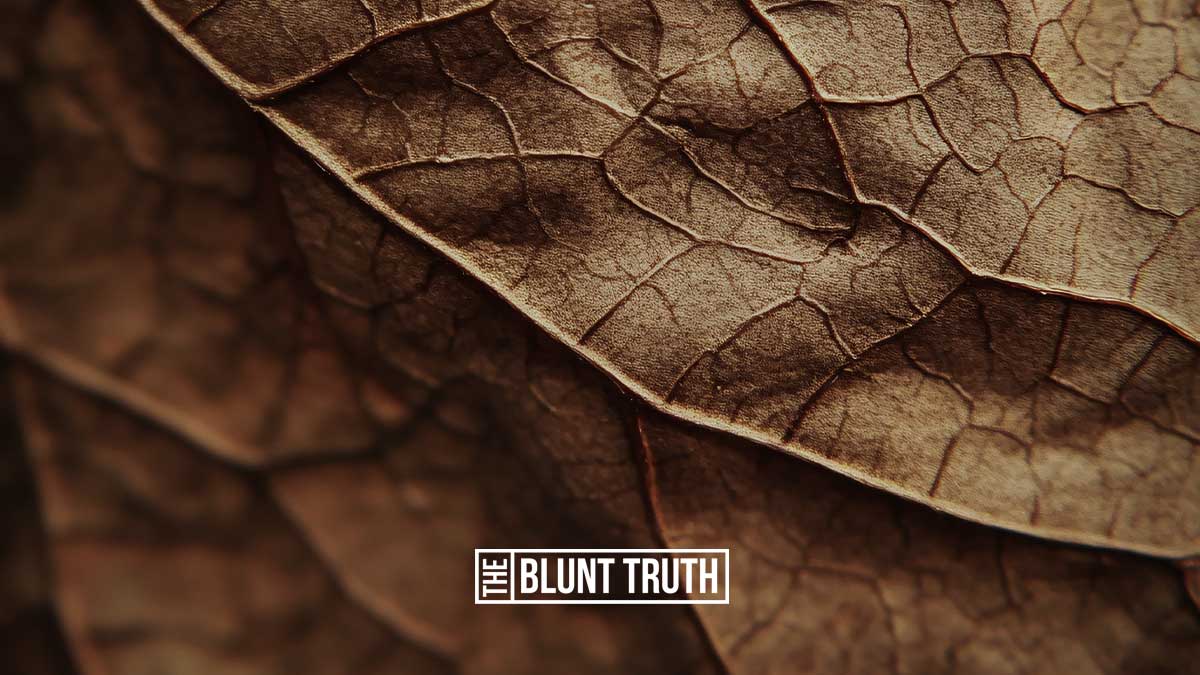
Cigar wrapper leaf is the outer tobacco leaf that covers a finished cigar. It is the most visible part of the cigar and one of the most carefully selected leaves used in cigar production.
Because the wrapper sits on the outside, it must be flexible enough to wrap smoothly around the cigar while also maintaining a clean appearance.
Quick Answer
Cigar wrapper leaf is the outer tobacco leaf used to finish a cigar. It is selected for its elasticity, smooth surface, fine veins, and consistent color.
Wrapper, Binder, and Filler
Traditional cigars are made from three types of tobacco leaves: filler, binder, and wrapper.
The filler forms the internal blend of the cigar and contributes most of the body and combustion characteristics. The binder leaf holds the filler together and helps maintain the cigar’s structure. The wrapper leaf is applied last and forms the finished exterior of the cigar.
Because the wrapper is fully visible on the finished cigar, it must meet stricter visual standards than binder or filler tobacco.
Where Wrapper Leaves Come From
Tobacco plants produce leaves along a central stalk. These leaves are harvested in stages called primings, beginning with the lower leaves and moving upward as the plant matures.
Different stalk positions produce leaves with different characteristics. Lower primings tend to produce thinner leaves, while upper primings often produce thicker leaves with higher oil content.
Wrapper tobacco is not limited to a single priming. Instead, wrapper leaves are selected after curing and fermentation based on their size, structure, surface quality, and elasticity. Depending on the crop and the tobacco variety, wrapper-quality leaves may come from several primings along the plant.
Leaf Structure and Veins
Wrapper leaves must have a large surface area and relatively fine veins. Heavy or thick veins can make the leaf more difficult to wrap and more visible on the finished cigar.
Growers aim to produce leaves with smooth surfaces and good elasticity so the leaf can be stretched and applied during cigar production.
Sun-Grown and Shade-Grown Wrapper Tobacco
Cigar wrapper tobacco may be grown either in full sunlight or under shade.
Sun-grown wrapper tobacco develops thicker leaves with higher oil content and often stronger flavor characteristics. Broadleaf tobacco is a well known example of sun-grown wrapper cultivation.
Shade-grown wrapper tobacco is cultivated under cloth canopies that filter sunlight. The reduced light encourages the plant to produce thinner leaves with finer veins and smoother surfaces.
In some regions, such as Ecuador, natural cloud cover provides a similar effect without the need for artificial shade structures.
Curing and Fermentation
After harvest, cigar tobacco leaves are typically hung in curing barns where they slowly dry in a process known as air curing. This stage removes moisture from the leaf and begins natural chemical changes in the tobacco.
Once curing is complete, the leaves are stacked into fermentation piles known as pilónes. During fermentation, natural heat builds within the piles and causes additional chemical changes that stabilize the tobacco and influence its color and aroma.
The fermentation process is carefully monitored and the piles are periodically restacked to maintain proper temperature and consistency.
Sorting and Selecting Wrapper Leaves
After curing, fermentation, and aging, tobacco leaves are sorted by hand. Workers examine each leaf for size, color, texture, vein structure, elasticity, and visible blemishes.
Only the most visually consistent leaves qualify as wrapper tobacco. Leaves that do not meet wrapper standards may still be used as binder or filler tobacco.
Color and Wrapper Grades
Wrapper leaves are also grouped according to color. After fermentation and aging, leaves are sorted into color ranges so that cigars in the same box have a consistent appearance.
These color classifications typically range from lighter shades to darker tones, although the exact terminology and grading systems can vary between cigar producers.
How Wrapper Leaf Affects a Cigar
The wrapper leaf influences the cigar’s appearance, combustion, and flavor. Because it is the outermost leaf, it also affects how the cigar burns and how smoke interacts with the palate.
While the internal blend of filler tobacco contributes much of the cigar’s body, the wrapper still plays an important role in the overall smoking experience.
Why Wrapper Tobacco Is Rare
Only a small percentage of harvested tobacco leaves meet the visual and structural standards required for wrapper tobacco. Most leaves are used as filler or binder instead.
Producing wrapper-quality leaves requires careful cultivation, controlled processing, and strict sorting standards.
Conclusion
Cigar wrapper leaf is one of the most carefully selected types of tobacco used in cigar production. Its structure, elasticity, appearance, and consistency all influence the finished cigar.
Because of these requirements, wrapper tobacco goes through multiple stages of cultivation, curing, fermentation, and sorting before it is ready to be used.