


What Are Blunt Wraps?
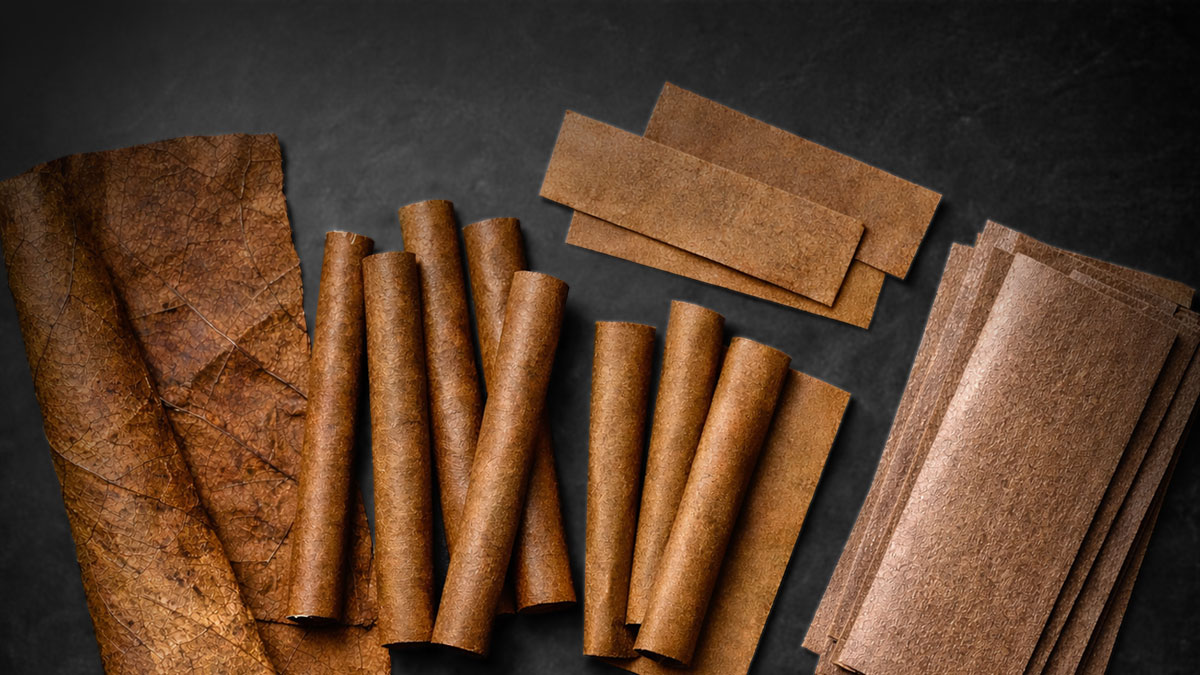
Blunt wraps are tobacco-based wraps used to roll cannabis. Unlike rolling papers, which are typically made from plant fibers such as hemp or wood pulp, blunt wraps are made from tobacco or tobacco-derived materials. Their thicker structure and composition create a distinct rolling and smoking format commonly referred to as a blunt.
Blunt wraps are produced using either whole cured tobacco leaves or reconstituted tobacco sheets. Reconstituted tobacco is made by processing tobacco into a pulp and forming it into uniform sheets, while natural wraps are made from intact tobacco leaves that retain their original structure.
Quick Answer
A blunt wrap is a tobacco-based wrap used to roll cannabis. Blunt wraps are thicker than rolling papers and are made from either reconstituted tobacco sheets or real cured tobacco leaves.
What Are Blunt Wraps Made Of
Blunt wraps are made from tobacco-based materials, which fall into two primary categories: whole tobacco leaf and reconstituted tobacco. Whole tobacco leaf wraps are created from cured leaves that maintain their natural fibers, veins, and structure. Reconstituted tobacco wraps are manufactured by combining tobacco pulp, fibers, and binding agents into a consistent sheet.
The material used affects how the wrap handles, how it burns, and how it performs during rolling. Natural tobacco leaf wraps typically have more structural variation, while reconstituted wraps are engineered for uniformity.
Key Characteristics of Blunt Wraps
- Made from tobacco leaf or tobacco-derived materials
- Thicker and more durable than rolling papers
- Used to roll cannabis into a blunt format
- Typically burn more slowly than standard rolling papers due to material density
Do Blunt Wraps Contain Nicotine
Because blunt wraps are made from tobacco, they typically contain nicotine. The amount of nicotine varies depending on the material used, the processing method, and the size of the wrap. Wraps made from whole tobacco leaf generally retain naturally occurring nicotine, while reconstituted wraps may contain nicotine depending on how they are produced.
This is a defining difference between blunt wraps and non-tobacco rolling papers, which do not contain nicotine unless explicitly infused.
What Makes Blunt Wraps Different From Rolling Papers
The primary difference between blunt wraps and rolling papers is material composition. Rolling papers are made from plant-based fibers such as hemp, flax, or wood pulp, while blunt wraps are made from tobacco.
This difference in material results in changes to thickness, flexibility, and burn behavior. Tobacco-based wraps are structurally denser and typically burn more slowly than thinner rolling papers. These characteristics contribute to the distinct format and experience associated with blunts.
Different Types of Blunt Wraps
Blunt wraps can be categorized based on how they are manufactured. Reconstituted tobacco wraps are designed for consistency in size, texture, and performance. These wraps are widely used due to their uniformity and ease of handling.
Natural tobacco leaf wraps are made from whole cured leaves. Because they retain the original structure of the leaf, including veins and fiber patterns, they may vary in appearance and handling characteristics. This variation is a direct result of using an agricultural product rather than a fully processed material.
Both types of wraps serve the same functional purpose but differ in composition, structure, and consistency.
The Role of Tobacco Leaf in Blunt Wraps
Tobacco used for blunt wraps is harvested and cured through established agricultural processes. Curing methods such as air-curing and flue-curing are used to reduce moisture and stabilize the leaf for use. These processes are also used in tobacco production for cigars and other tobacco products.
Regions known for tobacco cultivation, including the Dominican Republic, Nicaragua, and Honduras, produce tobacco that may be used in a variety of tobacco products. The origin of the tobacco can influence leaf characteristics such as thickness, elasticity, and structure.
Are Blunt Wraps the Same as Cigars
Blunt wraps and cigars both use tobacco, but they are not the same product. Cigars are pre-rolled tobacco products designed for smoking as-is. Blunt wraps are empty tobacco-based materials intended to be filled and rolled manually, typically with cannabis.
While cigars use tobacco for both wrapper and filler, blunt wraps are used only as the outer wrapping material.
Why Blunt Wraps Became Popular
Blunt wraps became widely used due to their durability, availability, and the distinct format they create when rolling cannabis. Their thicker construction allows them to hold larger amounts of material compared to standard rolling papers.
Over time, blunt wraps became associated with a specific rolling style and remain a commonly recognized format within cannabis use.
Conclusion
Blunt wraps are tobacco-based wraps used to roll cannabis, defined by their material composition and structural differences from rolling papers. They are made from either reconstituted tobacco sheets or whole cured tobacco leaves, both of which influence how the wrap handles and burns.
Because they are made from tobacco, blunt wraps typically contain nicotine and function differently from non-tobacco rolling papers. Understanding how blunt wraps are made and how they differ from other rolling materials provides a clear foundation for evaluating different wrap types.