


Real Tobacco Leaf Wraps vs Processed Wraps
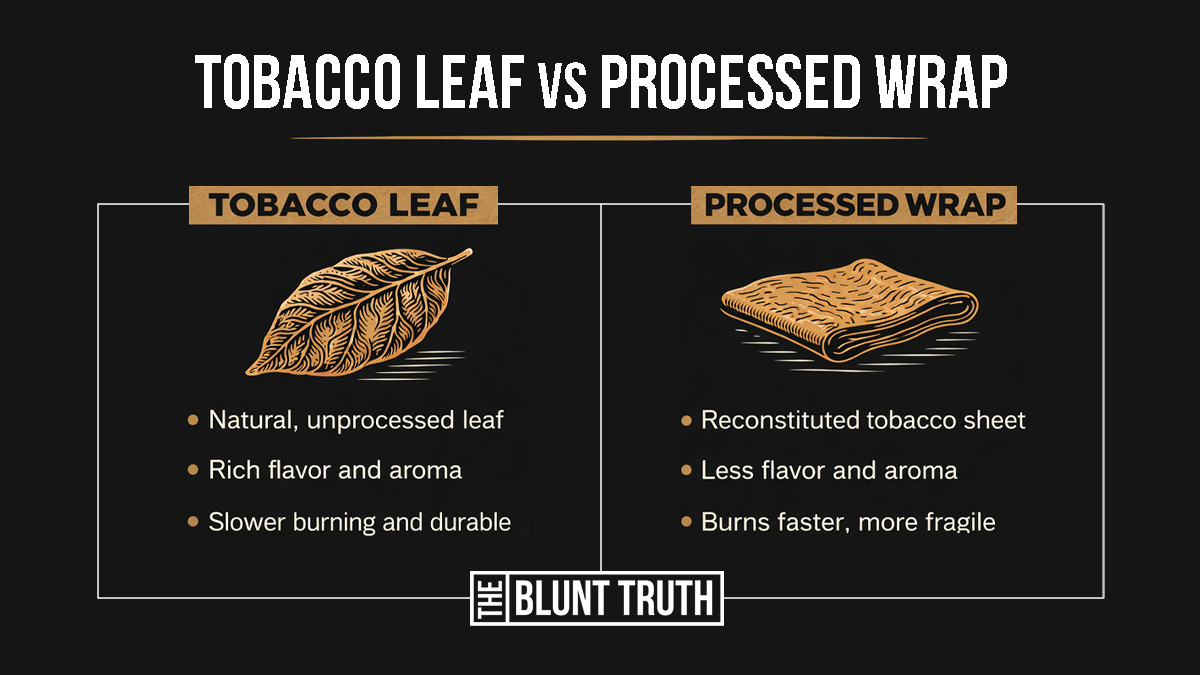
Blunt wraps are typically made using one of two approaches: natural tobacco leaf or processed tobacco sheet material. Understanding the difference between these two types of wraps helps explain why blunt wraps can vary in appearance, texture, and structure.
Some wraps are made from real tobacco leaves that have been harvested, cured, and prepared for use as wrappers. Other wraps are produced from processed tobacco sheets that are manufactured by compressing tobacco fibers into uniform materials.
Quick Answer
Real tobacco leaf wraps are made from cured tobacco leaves, while processed wraps are manufactured from compressed tobacco fibers formed into uniform sheets.
What Are Real Tobacco Leaf Wraps?
Real tobacco leaf wraps begin with an actual tobacco leaf harvested from the tobacco plant. After harvest, the leaves are cured, which allows them to dry and develop the structure necessary for use as a wrapper.
Once cured, the leaves can be prepared for wrapper applications. Because the wrap begins as a real leaf, it retains natural characteristics such as leaf veins, fibers, and slight variations in color and texture.
Tobacco leaves used for wrappers are often grown in regions known for tobacco cultivation, including the Dominican Republic, Nicaragua, and Honduras.
What Are Processed Tobacco Wraps?
Processed wraps are created using tobacco fibers that have been broken down and compressed into sheets. This manufacturing process allows producers to create wraps that are consistent in thickness and appearance.
Because processed wraps are manufactured materials rather than whole leaves, they typically appear more uniform than natural tobacco leaf wraps.
Structural Differences
The most noticeable difference between natural tobacco leaf wraps and processed wraps is their structure.
- Natural tobacco leaf wraps retain the original structure of the leaf, including veins and fibers.
- Processed wraps are manufactured to produce uniform sheets without visible leaf structure.
This structural difference is often visible when comparing the two materials side by side.
Natural Variation in Tobacco Leaves
Because natural tobacco leaf wraps begin with real leaves, they may display slight variations in appearance. Differences in color, thickness, and leaf veins occur naturally as part of the tobacco growing process.
These variations are normal characteristics of natural tobacco leaves.
Manufactured Consistency
Processed wraps are designed to produce consistent products by controlling thickness and appearance during manufacturing. This allows producers to create uniform wraps across large quantities of material.
The manufacturing process reduces natural variation but also removes the original leaf structure.
Conclusion
Real tobacco leaf wraps and processed wraps represent two different approaches to producing blunt wrap materials. Natural leaf wraps begin with cured tobacco leaves that preserve the structure of the original leaf, while processed wraps are manufactured from compressed tobacco fibers.