


Slow Burn Blunt Wraps Explained
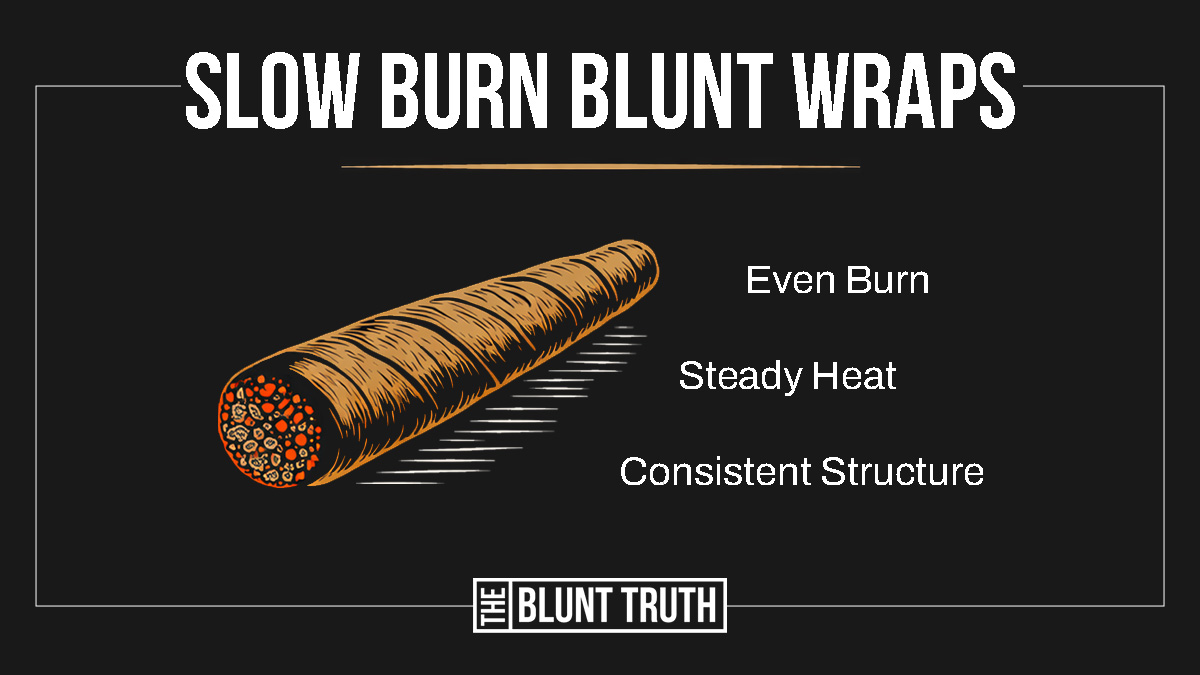
Slow burn blunt wraps refer to wraps that burn evenly and steadily during use. Because the wrap forms the outer layer of the blunt, the material used to create the wrap can influence how the blunt burns once it is rolled.
Several factors can affect burn performance, including the thickness of the wrap, the structure of the material, and how the blunt is rolled. In many cases, blunt wraps made from natural tobacco leaf are associated with steady burn behavior because tobacco leaves contain natural fibers that support the structure of the wrap.
Quick Answer
Slow burn blunt wraps are wraps designed to burn evenly and steadily. The burn rate of a blunt wrap can be influenced by the thickness and structure of the wrap material.
Why Burn Rate Matters
The burn rate of a blunt wrap affects how consistently the blunt burns once it is rolled. A wrap that burns too quickly may make it difficult to maintain an even roll, while a wrap that burns steadily helps maintain the shape and structure of the blunt.
For this reason, burn performance is often considered an important characteristic of a blunt wrap.
Factors That Influence Burn Performance
Several factors influence how a blunt wrap burns.
- Thickness of the wrap material
- Natural structure of the tobacco leaf
- Consistency of the roll
- Moisture level of the wrap
Because blunt wraps are thicker than rolling papers, they are often associated with slower and more consistent burn behavior.
The Role of Tobacco Leaf Structure
Tobacco leaves contain natural fibers that provide strength and flexibility. These fibers help the leaf maintain structure during rolling and use.
Because natural tobacco leaf retains these fibers, wraps made from real tobacco leaves may exhibit steady burn characteristics depending on how the blunt is rolled.
Rolling Technique Also Matters
The way a blunt is rolled can also influence burn performance. A blunt that is rolled unevenly may burn inconsistently regardless of the wrap material used.
Ensuring the contents are evenly distributed and the wrap is rolled tightly can help support a more consistent burn.
Moisture and Wrap Condition
The condition of the wrap can also affect how it burns. Wraps that are too dry may crack during rolling, while wraps with balanced moisture levels tend to remain flexible and easier to handle.
Proper storage can help maintain the condition of blunt wraps and support consistent performance.
Conclusion
Slow burn blunt wraps are wraps that maintain a steady and even burn during use. Burn performance can be influenced by the material used to create the wrap, the structure of the tobacco leaf, and the rolling technique used to prepare the blunt.