


How Cigar Tobacco Is Grown
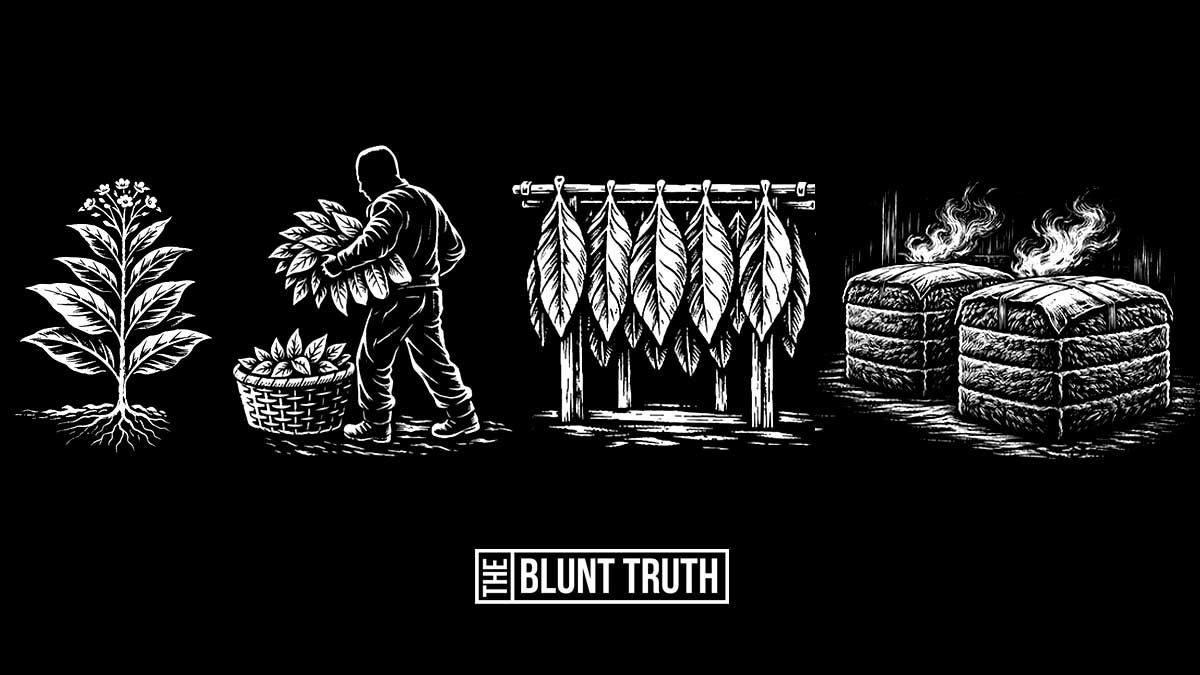
Cigar tobacco cultivation is a specialized agricultural process focused on producing large, flexible leaves suitable for premium cigar construction. Unlike many other tobacco crops, cigar tobacco must develop leaves with the correct balance of structure, elasticity, and oil content so they can be used as wrapper, binder, or filler tobacco.
The process begins with extremely small tobacco seeds and continues through several stages of plant development, harvesting through primings, and curing the leaf to prepare it for cigar production.
Quick Answer
Cigar tobacco is grown by starting tiny tobacco seeds in controlled environments, transplanting seedlings into prepared fields, managing plant growth through topping and sucker control, harvesting the leaves in stages called primings, and curing the harvested leaves so they develop the structure and characteristics required for premium cigars.
Seedling Production
Tobacco seeds are among the smallest agricultural seeds in commercial farming. Because of their size, cigar tobacco is typically started in controlled environments such as greenhouse trays or float bed systems. These systems allow farmers to carefully manage moisture, temperature, and nutrients while the seedlings establish their first leaves and root systems.
After several weeks of growth, the seedlings are strong enough to be transplanted into agricultural fields where the tobacco plants will complete their development.
Field Growth of Tobacco Plants
Once transplanted, tobacco plants grow rapidly during the warm growing season. Mature cigar tobacco plants often reach heights of five to seven feet and produce large leaves arranged vertically along the central stalk.
Each leaf develops at a different position on the plant and matures at a different time. These positions determine the leaf’s structure, thickness, oil content, and eventual role in cigar production.
Topping and Sucker Control
As tobacco plants mature, they naturally begin producing a flower at the top of the stalk. In cigar tobacco cultivation, farmers typically remove this flower through a process called topping.
Topping redirects the plant’s energy away from flower production and toward leaf development. This allows the leaves to grow thicker, larger, and richer in oils. After topping occurs, the plant often produces secondary shoots called suckers, which are removed to prevent them from drawing nutrients away from the primary leaves.
Harvesting Tobacco Through Primings
Tobacco leaves do not mature at the same time. Instead, they ripen gradually from the bottom of the plant to the top. Because of this, cigar tobacco is harvested in stages known as primings.
During each priming, farmers remove a set of leaves that have reached full maturity while allowing the higher leaves on the plant to continue developing. This staged harvesting process allows each leaf to be collected at the optimal moment for quality and structure.
Leaf Positions and Cigar Tobacco Types
The position of a leaf on the plant plays a major role in determining its characteristics. In premium cigar production, leaves are often categorized by their position and function within a cigar blend.
Volado leaves come from the lower primings of the plant. These leaves are typically thinner and burn easily, which makes them useful for controlling the burn rate of a cigar.
Seco leaves grow slightly higher on the plant and provide aroma and balanced flavor while still maintaining good combustion.
Viso leaves come from the middle primings and often contribute richer flavor and greater body to a cigar blend.
Ligero leaves develop near the top of the tobacco plant. These leaves receive the most sunlight and mature last, producing thicker structure, higher oil content, and stronger flavor. Ligero tobacco is often used in the filler of cigars to add strength and depth.
How Wrapper Tobacco Is Selected
Not every tobacco leaf grown on a plant is suitable for use as a cigar wrapper. Wrapper leaves must meet strict visual and structural standards, including smooth texture, minimal vein structure, and enough elasticity to wrap around a cigar without tearing.
Because of these requirements, wrapper tobacco is carefully selected during harvesting and processing. Only a small percentage of leaves from each crop will ultimately be used as premium cigar wrappers.
Wrapper tobacco is often grown under specialized conditions, including shade-grown cultivation, which produces thinner leaves with a smoother appearance. These characteristics are essential for the outer layer of a cigar.
Curing the Tobacco Leaves
After harvesting, tobacco leaves must undergo curing before they can be used in cigar production. Curing allows the leaves to slowly dry while undergoing natural chemical changes that affect their color, aroma, and structure.
Most cigar tobacco is air-cured in curing barns where temperature, humidity, and airflow allow the leaf to dry gradually over several weeks. During this time, the green leaf transforms into the brown tobacco leaf used in cigars.
Conclusion
Cigar tobacco cultivation is a highly specialized agricultural process that requires careful attention to plant development, harvesting methods, and leaf quality. From seedling production to priming and curing, each stage of the process contributes to the character of the finished tobacco leaf.
The same types of premium cigar tobacco leaves used in traditional cigar production are also used to create natural tobacco leaf wraps, allowing consumers to experience authentic cigar tobacco in a different form.