


What Are Blunt Wraps Made From?
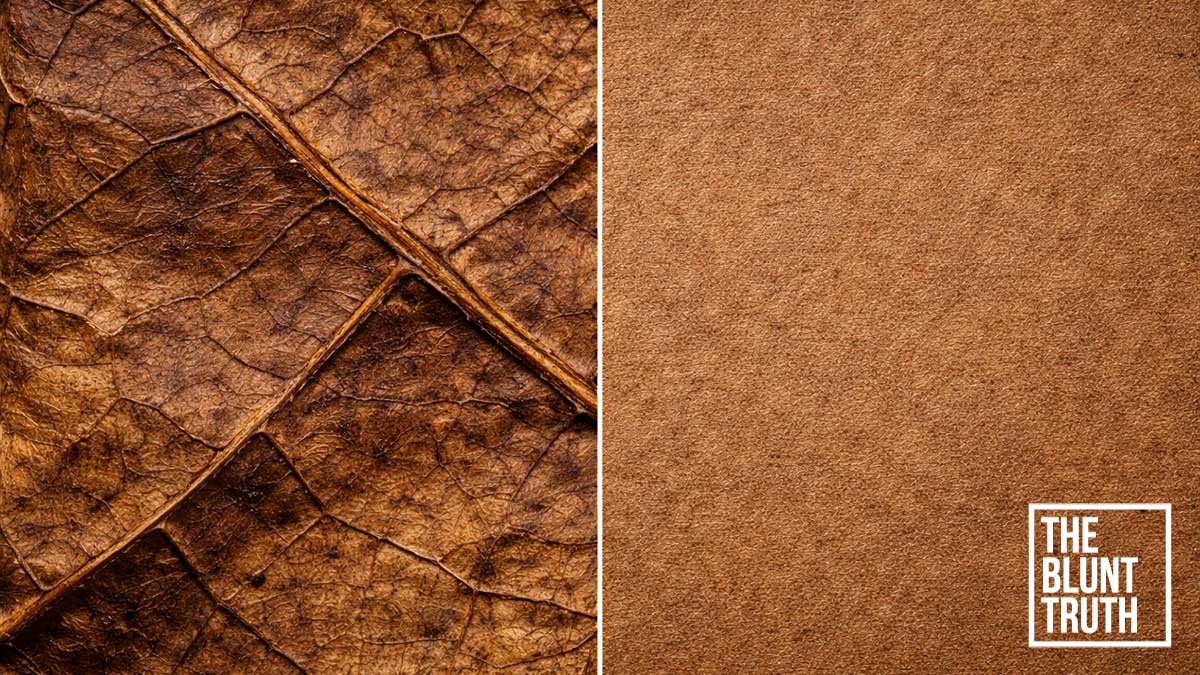
Blunt wraps are typically made from tobacco-based materials. Unlike rolling papers, which are usually made from plant fibers such as hemp or rice paper, blunt wraps use tobacco leaf or tobacco-derived materials to create a thicker wrap used for rolling cannabis.
The materials used to produce blunt wraps can vary depending on the product. Some wraps are manufactured from processed tobacco sheets, while others are made from real tobacco leaf. Understanding the difference between these materials helps explain why blunt wraps can feel and perform differently during rolling.
Quick Answer
Blunt wraps are made from tobacco-based materials. Some wraps are produced from reconstituted tobacco sheets, while others are made from natural tobacco leaf.
Common Materials Used for Blunt Wraps
The blunt wrap category includes several different types of materials used to create the wrap itself.
Processed Tobacco Sheet
Many blunt wraps are made from reconstituted tobacco sheet material. This material is created by processing tobacco fibers into a uniform sheet that can be cut and packaged as a wrap. The goal of this method is consistency in thickness and flexibility.
Natural Tobacco Leaf
Some blunt wraps are made from real tobacco leaf. In these cases, the wrap begins as a cured tobacco leaf rather than manufactured sheet material. Because natural leaves retain their natural structure, including fibers and veins, they may behave differently when rolled.
How Tobacco Leaf Is Prepared for Wraps
Tobacco used for wraps is typically harvested and cured before being prepared for use. Curing is the process that allows tobacco leaves to dry and develop their structure. Once cured, the leaves can be prepared for use as cigar wrappers or blunt wraps.
Tobacco used for premium cigar wrappers often comes from regions known for tobacco cultivation, including the Dominican Republic, Nicaragua, and Honduras. Leaves grown in these regions are widely known for their quality and structure.
Why Tobacco Leaf Is Used
Tobacco leaf has been used in cigar production for centuries, and its natural structure makes it well suited for use as a wrap. Because tobacco leaves are thicker than paper and contain natural fibers, they provide strength and flexibility when rolled.
This natural structure is one of the reasons tobacco leaf wraps are associated with traditional blunt rolling.
Differences Between Natural and Processed Wraps
Processed tobacco wraps are manufactured to create uniform products, while natural tobacco leaf wraps preserve the structure of the original leaf. As a result, natural leaf wraps may show visible leaf veins or slight variations in appearance.
These variations are part of what distinguishes real tobacco leaf wraps from manufactured sheet wraps.
Conclusion
Blunt wraps are made from tobacco-based materials. Some wraps are produced from processed tobacco sheets, while others are made from natural tobacco leaf. Understanding these materials helps explain why different blunt wraps behave differently when rolled.